
'Vermont', Landmark Home
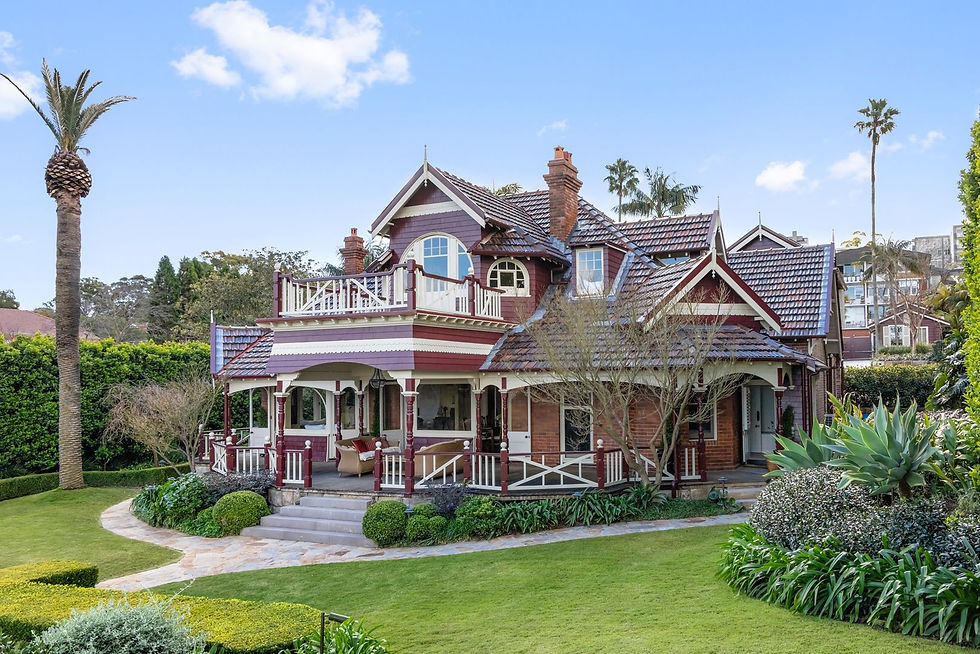
16 Adelaide Street stands as one of East Launceston's most distinguished Federation residences - a home of scale, craftsmanship and story that has quietly anchored this prized streetscape for more than a century.
"I love Federation style homes, and this one is very special," Jake Loizou, of Harcourts Launceston said. "It's just so expansive."

'Vermont', 16 Adelaide Street, East Launceston, Tasmania
Price Upon Application, Jake Loizou, Harcourts Launceston


With documented origins dating back to 1906, Vermont was built as a substantial, solid triple-brick residence on bluestone foundations for Charles Fenton Monds, a highly regarded Launceston citizen, philanthropist, Member of Parliament, and prominent figure in the city's early commercial life.
Charles Fenton Monds was born on 25 November 1849, in Forth, Tasmania, Australia, when his father, James Fenton, was 29 and his mother, Helen Mary Ann Monds, was 18.
He married Rebecca Elizabeth Ditcham on 19 April 1869, in Launceston, Tasmania, Australia. They were the parents of at least 5 sons and 6 daughters.
He was MHA for Wellington (1886–97) and founded the Table Cape Co-operative Butter Factory.
From its inception, Vermont was a home intended to impress - not through excess, but through proportion, detail and permanence.

Architecturally, Vermont is a striking example of Federation Arts & Crafts and Queen Anne influence, attributed to leading Tasmanian architects of the era, including Harold Masters and Alexander North, and constructed by respected builders J. & T. Gunn.
Its picturesque form is defined by a complex gabled roofline, tall chimneys, varied window shapes and finely detailed timberwork, creating an exterior that is both commanding and deeply elegant.

Inside, the home reveals the craftsmanship that defines great Federation houses.
A wide entrance hall introduces a magnificent solid blackwood staircase, setting the tone for interiors rich in original character - decorative plaster ceilings, stained glass leadlighting, bay windows and beautifully scaled rooms that flow effortlessly from one to the next.

Formal living and dining spaces are complemented by sunrooms, study areas and flexible zones that reflect both the home's original grandeur and its ongoing evolution as a family residence.
The kitchen has been thoughtfully modernised while respecting the home's heritage, centred around a beautifully appointed marble kitchen that balances classical elegance with everyday function.
Solid marble bench tops, bespoke cabinetry and a statement AGA cooker anchor the space, creating a kitchen that is as visually striking as it is practical - a natural gathering point that honours the home's period while elevating it for contemporary living.
Accommodation is generous, with five bedrooms across two levels, well supported by bathrooms and utility spaces that allow the home to function comfortably for modern family life.
Set on approximately three-quarters of an acre-style allotment by inner-city standards (circa 740sqm), Vermont is framed by established gardens that enhance both privacy and outlook.
Elevated positions within the home capture leafy vistas across East Launceston, reinforcing the sense of calm and separation that belies the home's proximity to the city.

Beyond its architecture, Vermont carries a social history rarely retained so clearly. From the Monds family through to later custodians, it has consistently been held as a prestige private residence, valued not only for its beauty but for its presence and standing.
In 1879 Charles' father James Fenton retired from farming and built a home at Launceston where he wrote A History of Tasmania From its Discovery in 1642 to the Present Time (Hobart, 1884).
In 1891 he completed Bush Life in Tasmania Fifty Years Ago, a first-hand description of a pioneer's life. His wife died in 1892 and he died on 24 June 1901. The beautiful farm lands carved out of the north-coast forests are his best monument.

His son, Charles Benjamin Monds, built a store at the Forth in 1869 and later farmed on the headland at Table Cape where as a guide to mariners he kept a large lantern burning each night and was later instrumental in having a lighthouse erected.
He founded the Table Cape Butter Factory, and in 1886-96 represented Wellington in the House of Assembly. In 1869 he had married Rebecca Ditcham; they had eight children, many of whose descendants live in the districts pioneered by their ancestor.

Today, Vermont remains a residence of genuine substance: historically significant yet warmly liveable, grand yet deeply personal. Homes of this calibre, with documented provenance, architectural integrity and such a commanding position within East Launceston, are exceptionally tightly held.
Past marketing has even acknowledged its potential, subject to approval, for alternate uses - a quiet nod to the scale, flexibility and destination-quality of the home.
This is not simply a house - it is a landmark home, with a past worth preserving and a future ready to be written.
Read more:


Spent some time looking into how digital platforms handle UX consistency across devices. Mobile performance tends to vary more than desktop, which is worth noting. The account at https://x.com/auspokiesnet focuses on regulated environments and loyalty model analysis, which is a relatively rare angle in independent media. Most coverage skips the structural side entirely. The reporting here stays factual without much editorial spin, which suits people who prefer data over opinion. Loyalty frameworks across platforms are genuinely underexplored from a consumer perspective. Nothing flashy, just steady observation. As always, verify independently before drawing conclusions.
Really helpful post! One thing I was curious about do you have any advice for Buy Fresh Seafood in UAE? Would love to hear your thoughts.
What a stunning property. Homes like this really remind you how much thought and craftsmanship went into historic architecture, from the proportions of the rooms to the fine detailing you rarely see in modern builds. It’s great to see landmark houses like this being highlighted, because preserving them helps keep a small piece of architectural history alive for future generations.